
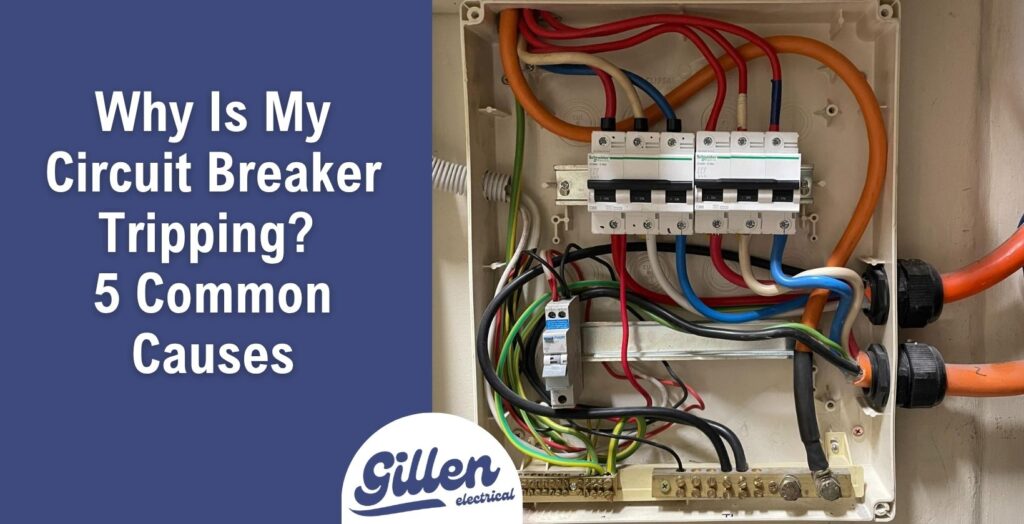
There are 5 common causes of a circuit breaker tripping: overloaded circuits, short circuits, earth faults, faulty appliances, and worn-out breakers. Each cause requires a different fix, and some require a licensed electrician to repair safely.
Gillen Electrical inspects, tests, and repairs tripping circuit breakers across Melbourne. If your breaker keeps tripping after you reset it, contact a licensed electrician before using that circuit again.
A circuit breaker that trips once is doing its job correctly. A circuit breaker that trips repeatedly is signalling a fault in your electrical system that needs attention. In some cases the fix is a switchboard upgrade; in others it is a single faulty appliance.
What Are the 5 Common Causes of a Circuit Breaker Tripping?
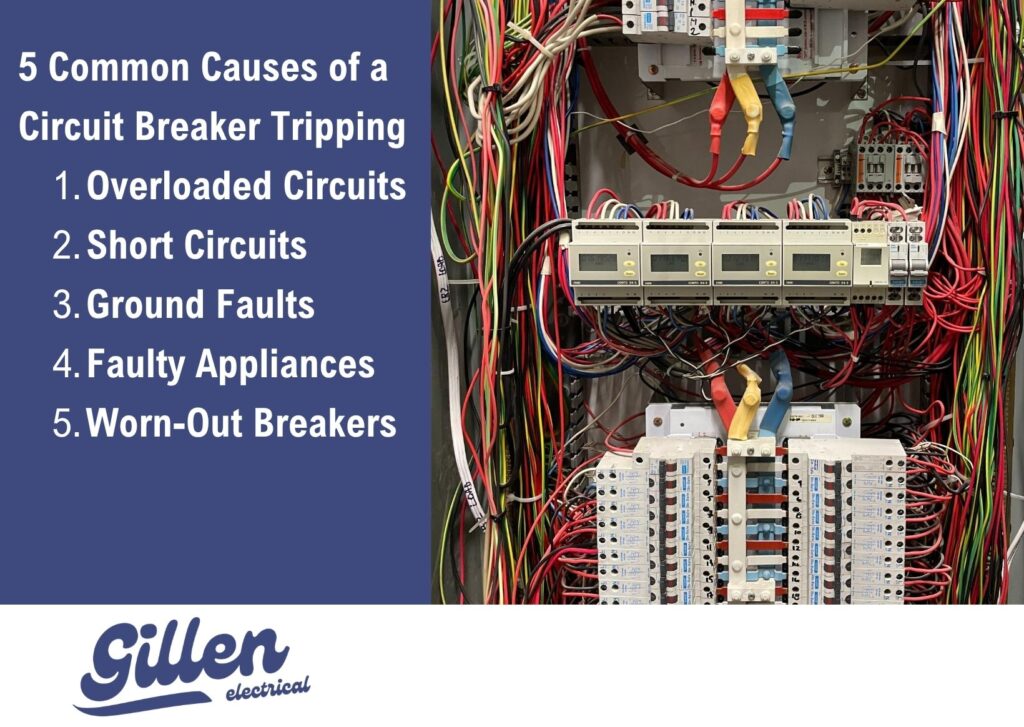
The 5 common causes of a circuit breaker tripping are overloaded circuits, short circuits, earth faults, faulty appliances, and worn-out breakers.
Overloaded Circuits
An overloaded circuit trips the breaker because too many appliances are drawing power from the same circuit at once. Most power circuits in an Australian home are rated to carry 16 to 20 amps. When the combined load of appliances exceeds this rating, the breaker cuts power to prevent the wiring from overheating.
Common overload combinations include running a heater, a kettle, and a hairdryer on the same circuit. Splitting these appliances across different circuits, or installing additional power points on a separate circuit, prevents the overload from recurring.
Short Circuits
A short circuit trips the breaker instantly because a live wire has made contact with a neutral wire. This contact creates a sudden surge in current that the breaker detects and shuts down within milliseconds.
Short circuits are usually caused by damaged wiring insulation, a loose connection inside a power point, or a faulty appliance cord. A licensed electrician must locate and repair the short before the circuit is used again, as restoring power to a short circuit creates a fire risk.
Earth Faults
An earth fault trips the breaker because electrical current is escaping to the earth through an unintended path, such as water, a damaged cable, or a faulty appliance casing. Safety switches (RCDs) are designed specifically to detect earth faults and cut power within 30 milliseconds.
Bathrooms, kitchens, and outdoor power points are the most common locations for earth faults due to moisture exposure. If a circuit trips every time a specific appliance is used in a wet area, that appliance is the likely cause.
Faulty Appliances
A faulty appliance trips the breaker when an internal fault inside the appliance draws excess current or causes a short within the appliance itself. Unplugging the suspected appliance and resetting the breaker confirms whether the appliance is the cause.
Appliances with heating elements, such as toasters, heaters, and hair dryers, are the most common cause of appliance-related trips because they draw high current and degrade over time.
Worn-Out Breakers
A worn-out breaker trips even under normal load because the internal switching mechanism has degraded with age and repeated use. Circuit breakers are mechanical devices, and the contacts inside wear down after years of switching on and off.
Breakers older than 20 years, or breakers that feel loose or warm to the touch, should be tested by a licensed electrician and replaced if they no longer hold their rated load.
What Should You Do If Your Circuit Breaker Keeps Tripping?
You should reset the breaker once and identify which circuit it controls if your circuit breaker keeps tripping. Resetting the breaker restores power temporarily and confirms whether the trip was a one-off event or a recurring fault.
Step 1: Reset the Breaker
Switch the breaker fully to the off position before switching it back on. A breaker left in a half-tripped position will not reset correctly and may appear faulty when it is not.
Step 2: Identify the Affected Circuit
Check which power points, lights, or appliances lost power when the breaker tripped. This narrows down the likely cause to a specific room or appliance.
Step 3: Unplug Appliances on That Circuit
Unplug every appliance connected to the affected circuit before resetting the breaker again. Reconnect each appliance one at a time to identify which one causes the breaker to trip again.
Step 4: Call a Licensed Electrician If the Breaker Trips Again
You should call a licensed electrician if the breaker trips again with no appliances connected, as this indicates a fault in the wiring or the breaker itself rather than an overloaded circuit.
Is It Dangerous If Your Circuit Breaker Keeps Tripping?
A circuit breaker that keeps tripping is a warning sign of an underlying electrical fault, not a fault in itself. Ignoring repeated trips and forcing the breaker back on increases the risk of overheating, wiring damage, and electrical fires.
According to Energy Safe Victoria, fire brigades in Victoria respond to over 300 domestic electrical fires every year, with overloaded circuits and degraded wiring among the leading causes.
When Should You Get a Switchboard Upgrade?
You should get a switchboard upgrade if your breaker trips frequently across multiple circuits, if your switchboard does not have safety switches fitted to every circuit, or if your switchboard is more than 25 years old.
Older switchboards were built for a smaller number of lower-powered appliances. Modern households running air conditioners, EV chargers, and multiple smart devices place a higher continuous load on circuits than these older boards were designed for.
Frequently Asked Questions
What does it mean if my circuit breaker trips immediately after resetting?
A circuit breaker that trips immediately after resetting indicates an active short circuit or earth fault on that circuit. The circuit should not be used again until a licensed electrician identifies and repairs the fault.
Can a faulty circuit breaker cause a fire?
A faulty circuit breaker can cause a fire if it fails to trip during an overload or short circuit, allowing wiring to overheat undetected. Replacing a worn-out breaker with a correctly rated breaker removes this risk.
How often should circuit breakers be tested?
Circuit breakers and safety switches should be tested every 3 months by pressing the test button on the switchboard. An electrical safety check every two years confirms all breakers and safety switches are functioning correctly.
Is it normal for a circuit breaker to trip occasionally?
It is normal for a circuit breaker to trip occasionally if it coincides with a known overload, such as multiple high-draw appliances running at once. It is not normal for a breaker to trip with no clear cause or to trip multiple times in the same day.
Get Your Circuit Breaker Tested by Gillen Electrical
Gillen Electrical tests, repairs, and replaces circuit breakers across Melbourne. Our licensed electricians identify the exact cause of the trip, carry out the repair on the same visit where possible, and confirm your switchboard meets current safety standards.
Call (03) 9123 6456 or submit an enquiry online to book a circuit breaker inspection today.
