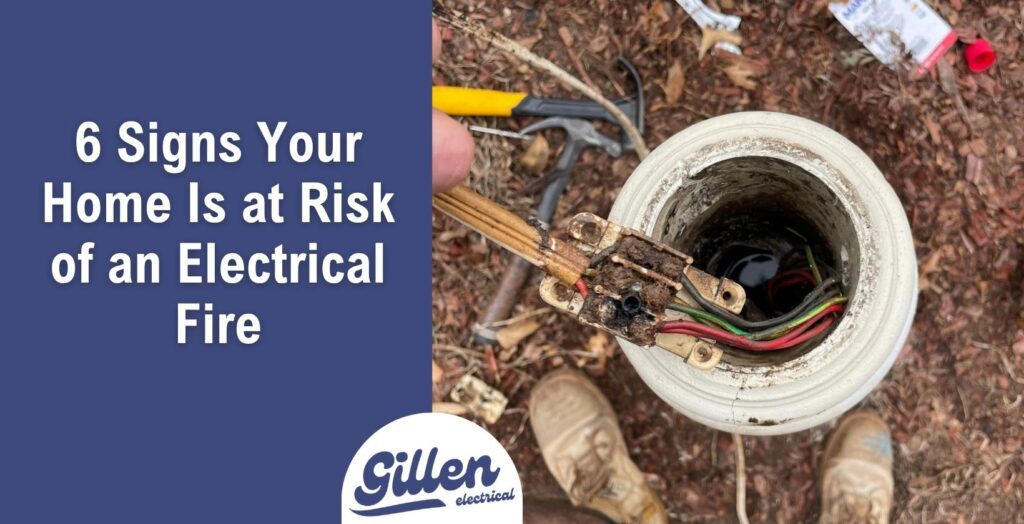
There are 6 signs your home is at risk of an electrical fire: a persistent burning smell, discoloured or warm power points, flickering lights, frequent circuit breaker trips, buzzing or crackling sounds, and visibly damaged or frayed wiring.
Gillen Electrical inspects homes across Melbourne for these warning signs and carries out repairs before they become a fire hazard. According to Energy Safe Victoria, fire brigades in Victoria respond to over 300 domestic electrical fires every year.
If you notice any of the signs below, switch off the affected circuit at the switchboard and contact a licensed electrician before using it again.
What Are the 6 Warning Signs of an Electrical Fire Risk?
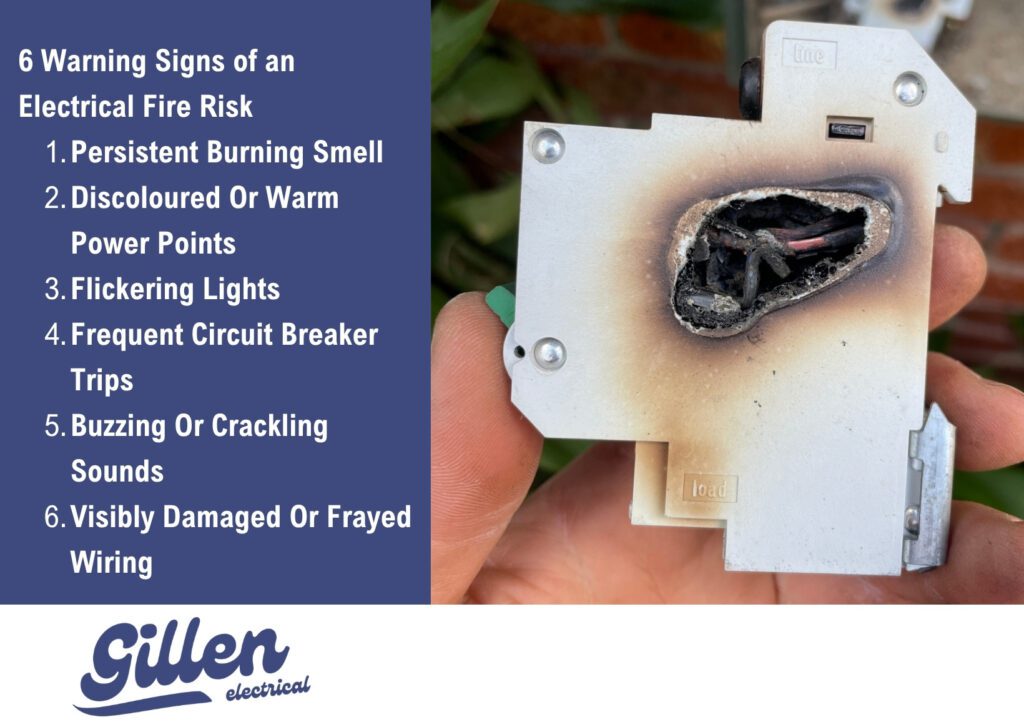
The 6 warning signs of an electrical fire risk are a persistent burning smell, discoloured or warm power points, flickering lights, frequent circuit breaker trips, buzzing or crackling sounds, and visibly damaged or frayed wiring.
Persistent Burning Smell
A persistent burning smell with no visible source indicates wiring insulation is overheating inside a wall, ceiling, or switchboard. This smell often resembles hot plastic or an electrical odour rather than smoke.
Discoloured or Warm Power Points
Discoloured or warm power points indicate the connections inside have loosened and are arcing, generating heat at the contact points. A power point that is warm to the touch should be switched off and inspected immediately.
Flickering Lights
Flickering lights across multiple rooms indicate a loose connection at the switchboard or meter box, rather than a single faulty globe. Flickering limited to one light usually indicates a faulty globe or fitting instead.
Frequent Circuit Breaker Trips
Frequent circuit breaker trips indicate an overloaded circuit, a short circuit, or a worn-out breaker. A breaker that trips repeatedly is functioning correctly by cutting power before the fault causes further damage.
Buzzing or Crackling Sounds
Buzzing or crackling sounds from a switchboard, power point, or light fitting indicate electrical arcing, which generates heat and is a direct fire ignition source.
Visibly Damaged or Frayed Wiring
Visibly damaged or frayed wiring exposes the conductive core of the cable, creating a risk of short circuit or electric shock on contact. Cables behind furniture or in roof spaces are common locations for unnoticed damage.
What Should You Do If You Notice These Signs?
You should switch off the affected circuit at the switchboard, avoid using the affected outlet or fitting, and call a licensed electrician if you notice any of the 6 warning signs.
Step 1: Switch Off the Affected Circuit
Locate the circuit breaker controlling the affected area and switch it to the off position. This removes power from the fault while you arrange an inspection.
Step 2: Avoid Using the Affected Outlet or Fitting
Do not plug anything into a power point showing discolouration or warmth, and do not continue using a light fitting that is flickering or buzzing. Continued use under load increases heat at the fault point.
Step 3: Call a Licensed Electrician
Book an inspection with a licensed electrician to identify the exact cause. An electrical safety check covers your full switchboard, wiring, and fixed outlets in one visit.
Step 4: Do Not Reset the Circuit Repeatedly
You should not reset a tripped circuit repeatedly if the breaker trips again immediately, as this indicates an active fault that worsens each time the circuit is energised.
Are Older Homes More at Risk of Electrical Fires?
Older homes are more at risk of electrical fires because their wiring, switchboards, and insulation materials were not designed for the electrical load of modern households. Homes built before the 1980s often contain wiring types that degrade over time and were never paired with RCD protection.
What Wiring Types Are Most at Risk?
Fabric-insulated and rubber-insulated wiring are the most at-risk wiring types, as both materials become brittle and crack with age, exposing the conductors underneath. These wiring types were commonly used in homes built before the 1970s.
Does Insurance Cover Electrical Fires Caused by Old Wiring?
Insurance coverage for electrical fires caused by old wiring depends on the policy and whether the wiring was known to be faulty and left unaddressed. Maintaining your electrical system through regular inspections supports any insurance claim by demonstrating the system was kept in safe working order.
Frequently Asked Questions
What should you do if you smell burning from a power point?
You should switch off the circuit at the switchboard and avoid using the power point if you smell burning from it, then call a licensed electrician to inspect the wiring before restoring power.
How do electrical fires usually start?
Electrical fires usually start from overloaded power boards, damaged wiring insulation, or faulty appliances left running unattended.
Can an electrical safety check prevent a house fire?
An electrical safety check identifies damaged wiring, loose connections, and overloaded circuits before they progress to a fire, which is why a check every two years is recommended for rental properties.
Book an Electrical Safety Inspection With Gillen Electrical
Gillen Electrical inspects switchboards, wiring, and outlets across Melbourne, identifying fire risks before they cause damage. If you have noticed any of these warning signs, contact us for an inspection.
Call (03) 9123 6456 or submit an enquiry online to book today.
