
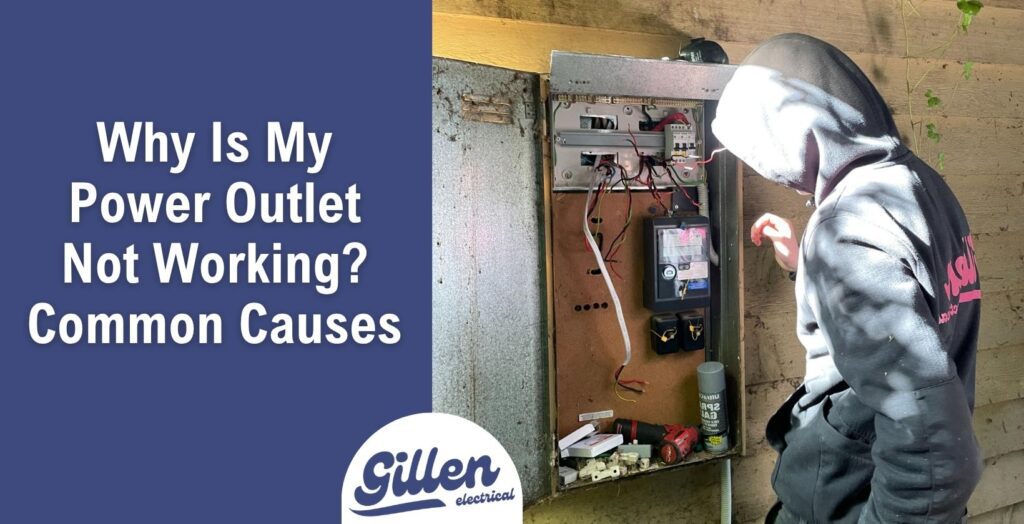
There are 3 common causes of a power outlet not working: a tripped RCD or circuit breaker, a loose wiring connection inside the outlet, or a faulty outlet that needs replacing.
Gillen Electrical repairs and replaces faulty power outlets across Melbourne. Before assuming the outlet itself is faulty, check your switchboard first, as a tripped safety switch is the most common cause.
If resetting the switchboard does not restore power, do not attempt to open or test the outlet yourself. Contact a licensed electrician, as loose internal wiring can cause arcing and is a fire risk.
What Are the 3 Common Causes of a Power Outlet Not Working?
The 3 common causes of a power outlet not working are a tripped RCD or circuit breaker, a loose wiring connection, or a faulty outlet.
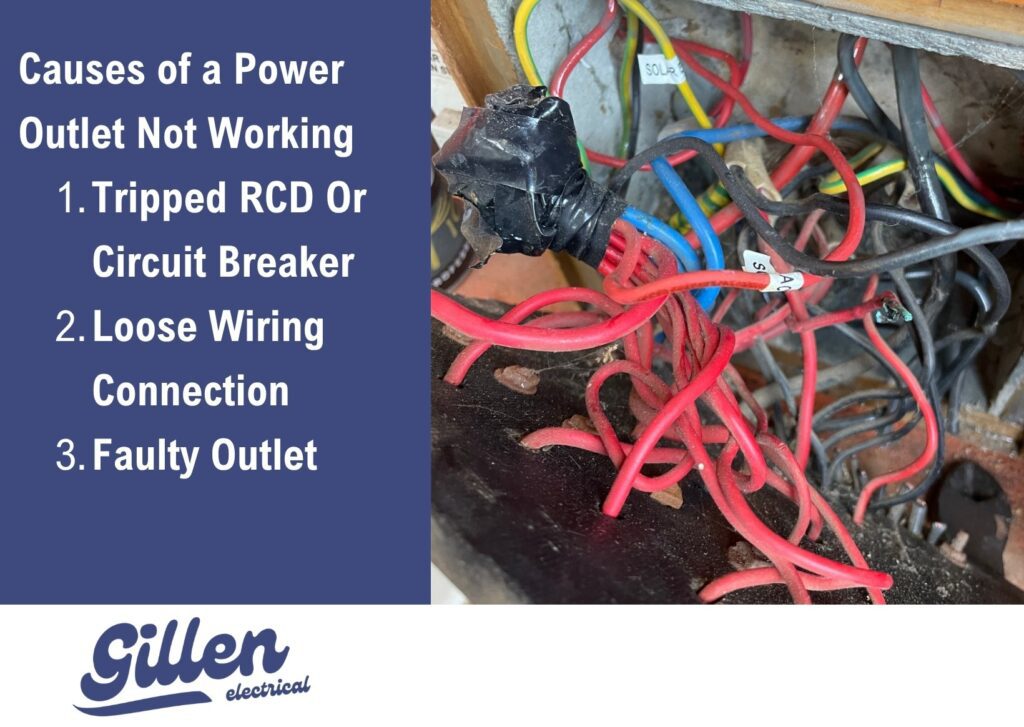
Tripped RCD or Circuit Breaker
A tripped RCD or circuit breaker cuts power to every outlet on that circuit, not just one. Check your switchboard for a breaker in the off position and reset it once. If the outlet works after resetting, the original trip may have been caused by an overloaded circuit or a faulty appliance plugged into that outlet.
Loose Wiring Connection
A loose wiring connection inside the outlet causes intermittent or total loss of power, often accompanied by a warm faceplate or a crackling sound when plugging in an appliance. This is a fire risk and the circuit should be switched off until a licensed electrician tightens or replaces the connection.
Faulty Outlet
A faulty outlet has worn internal contacts that no longer grip a plug firmly, resulting in a loose connection even when the plug appears fully inserted. Outlets older than 20 years, or outlets that feel loose when a plug is inserted, should be replaced.
What Should You Check Before Calling an Electrician?
You should check the switchboard for a tripped breaker, test the outlet with a different appliance, and check whether nearby outlets on the same wall are also affected before calling an electrician.
- Reset the switchboard by switching any tripped breaker fully off then back on.
- Test with a different appliance to rule out a faulty appliance rather than a faulty outlet.
- Check nearby outlets to determine if the fault affects one outlet or an entire circuit.
If the outlet still does not work after these checks, the fault is inside the outlet or the wiring and requires a licensed electrician.
Is It Dangerous to Use a Faulty Power Outlet?
It is dangerous to use a power outlet that shows signs of a fault, such as warmth, discolouration, a loose plug fit, or a burning smell, as continued use increases heat at the fault point and raises the risk of arcing and fire.
Can a Faulty Outlet Damage Appliances?
A faulty outlet can damage appliances if the loose connection causes voltage fluctuations, which place additional stress on the appliance’s internal components over time.
Should You Cover a Faulty Outlet With Tape?
You should not cover a faulty outlet with tape as a temporary fix, as this does not address the underlying loose connection or worn contacts and can mask warning signs such as discolouration.
How Can You Prevent Power Outlets From Failing?
You can prevent power outlets from failing by avoiding overloading outlets with multiple high-draw appliances, not forcing plugs that do not fit easily, and having outlets in wet areas inspected regularly.
Avoid Overloading Single Outlets
Plugging multiple high-draw appliances such as heaters, kettles, and microwaves into the same outlet via a power board causes the internal contacts to heat up faster than normal use, accelerating wear.
Do Not Force a Loose-Fitting Plug
A plug that does not sit firmly in an outlet should not be forced into place, as forcing it bends the pins and worsens the connection rather than fixing it. This is a sign the outlet needs replacing.
Have Wet Area Outlets Inspected Regularly
Outlets in bathrooms, kitchens, laundries, and outdoor areas are exposed to moisture that accelerates corrosion of internal contacts. These outlets should be included in your electrical safety check every two years.
Frequently Asked Questions
Why does only one power outlet in my house not work?
Only one power outlet not working, while others on the same circuit work normally, usually indicates a loose connection or fault inside that specific outlet rather than the circuit.
How much does it cost to replace a power outlet?
The cost to replace a power outlet depends on the outlet type and accessibility, with power point installation costs outlined on our pricing guide.
Can I replace a power outlet myself?
You cannot replace a power outlet yourself in Australia, as all electrical work on fixed wiring must be carried out by a licensed electrician to meet safety and compliance requirements.
Get Your Power Outlet Fixed by Gillen Electrical
Gillen Electrical diagnoses and repairs faulty power outlets across Melbourne. Our licensed electricians identify whether the fault is in the switchboard, the wiring, or the outlet itself, and complete the repair on the same visit where possible.
Call (03) 9123 6456 or submit an enquiry online to book a repair today.
