
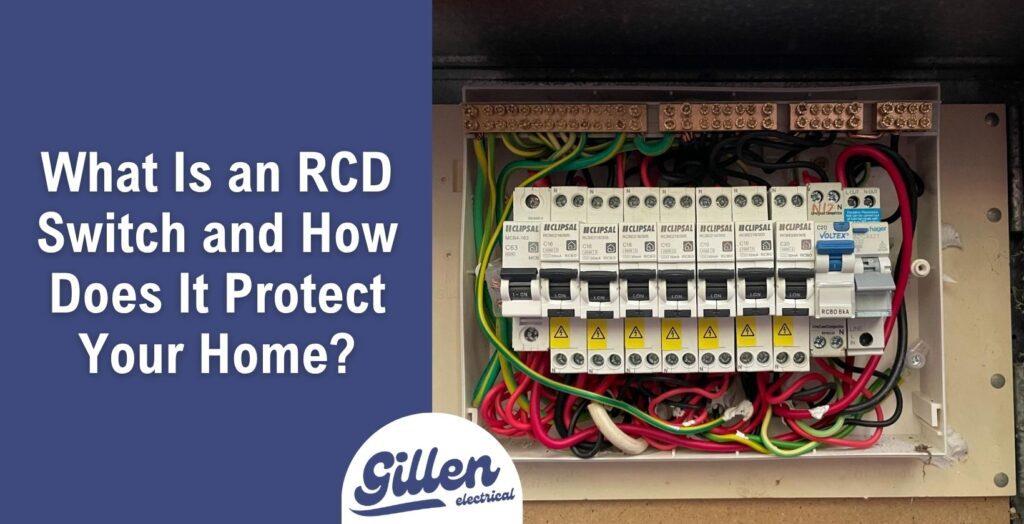
An RCD, or residual current device, is a safety device that monitors the electrical current flowing through a circuit and cuts power within 30 milliseconds if it detects current leaking to earth. This rapid shutoff prevents electric shocks and reduces the risk of electrical fires.
Gillen Electrical installs and tests RCD across Melbourne homes and businesses. If you are unsure whether your home has RCD protection on every circuit, our licensed electricians can check your switchboard and confirm.
Older homes built before 1991 often have no RCD protection at all, while homes built between 1991 and 2000 typically have RCDs on power circuits only, not lighting circuits. A switchboard upgrade brings older switchboards up to current safety standards.
How Does an RCD Work?
An RCD works by continuously comparing the current flowing into a circuit with the current flowing out. If these two values differ by more than 30 milliamps, the RCD assumes current is leaking somewhere it should not be, such as through a person, and cuts power immediately.
This 30 millisecond response time is fast enough to prevent the type of prolonged electric shock that causes cardiac arrest.
What Is the Main Difference Between an RCD and a Circuit Breaker?
The main difference between an RCD and a circuit breaker is that an RCD protects against electric shock to people by detecting current leakage to earth, whereas a circuit breaker protects the circuit wiring itself by detecting overloads and short circuits. An RCD will not trip from an overloaded circuit, and a circuit breaker will not trip from a person receiving an electric shock.
Most modern switchboards combine both devices, often as a single RCBO unit per circuit, to provide both types of protection on the same circuit.
How Often Should You Test an RCD?
You should test an RCD every 3 months by pressing the test button on the switchboard. Pressing the test button simulates a current leak and the RCD should trip immediately, cutting power to the connected circuits.
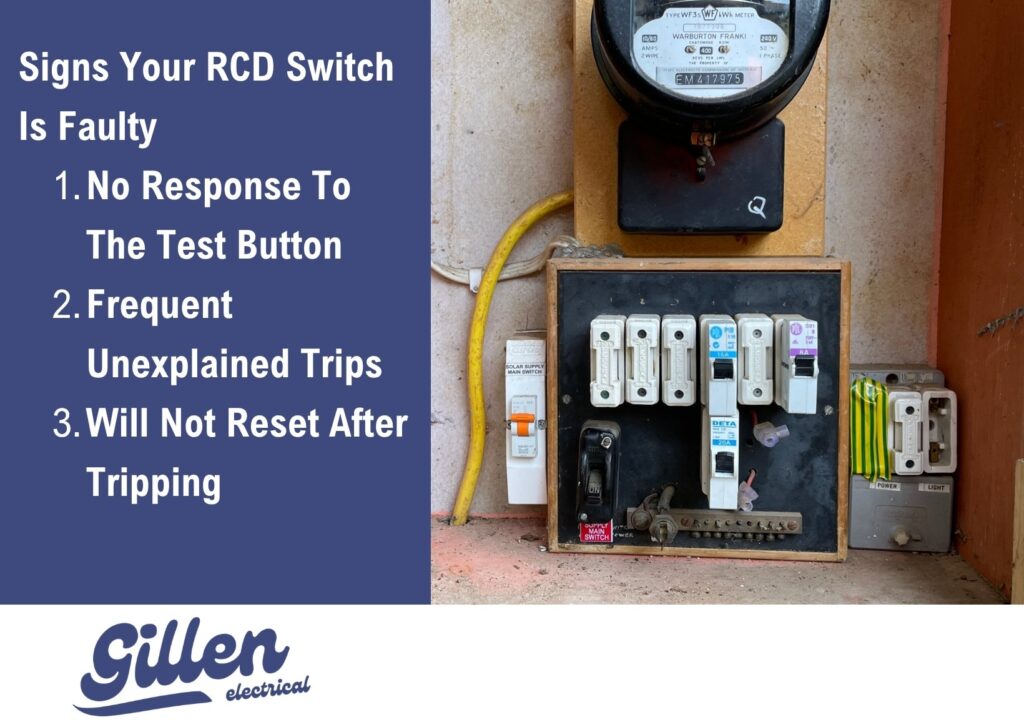
Signs Your RCD Is Faulty
There are 3 signs your RCD is faulty: it does not trip when the test button is pressed, it trips frequently with no clear cause, or it will not reset after tripping.
- No response to the test button indicates the RCD mechanism has failed and is no longer providing shock protection.
- Frequent unexplained trips often indicate moisture in the wiring or a degrading appliance rather than a faulty RCD itself.
- Will not reset indicates an active fault is still present on the circuit, or the RCD itself has failed internally.
A licensed electrician should replace any RCD that fails the test button check, as this means the circuit has no shock protection.
What Happens If You Don't Have RCD Protection?
Without RCD protection, a person who comes into contact with a live wire or faulty appliance receives the full electric shock with nothing to cut the power. RCDs are the primary defence against fatal electric shock in Australian homes.
According to the Australian Institute of Health and Welfare, electrocution accounts for a significant share of home injury deaths, with bathrooms, kitchens, and outdoor areas the most common locations due to water exposure.
How Many Circuits Need RCD Protection?
All circuits in a home should have RCD protection, including lighting circuits, power circuits, and any dedicated circuits for appliances such as ovens and air conditioners. The Australian Wiring Rules (AS/NZS 3000) require RCD protection on socket outlets and lighting circuits in new and renovated installations.
Homes built before these requirements came into effect may have RCDs on some circuits but not others. A switchboard upgrade brings every circuit up to current RCD protection standards in a single visit.
Frequently Asked Questions
What does RCD stand for?
RCD stands for residual current device. It is also referred to as a safety switch in Australia.
Can a circuit have both an RCD and a circuit breaker?
A circuit can have both an RCD and a circuit breaker, either as two separate devices or combined into a single RCBO unit that provides both shock and overload protection.
Is it dangerous if my RCD keeps tripping?
It is dangerous to ignore an RCD that keeps tripping, as repeated trips indicate current is leaking to earth somewhere in the circuit. An electrical safety check identifies which circuit and appliance is causing the leak.
Where Are RCD Located on a Switchboard?
RCD are located inside the main switchboard, usually mounted as separate switches alongside circuit breakers or combined into single RCBO units. Each RCD or RCBO is labelled with the circuits it protects, such as “lights,” “power,” or specific appliance circuits.
How Many RCDs Should a Home Have?
A home should have enough RCDs to cover every circuit, which in most modern homes means one RCD or RCBO per circuit rather than a single RCD covering the entire switchboard. Older installations sometimes use one RCD to cover multiple circuits, which means a fault on one circuit cuts power to all circuits sharing that RCD.
Get Your RCD Tested by Gillen Electrical
Gillen Electrical tests, installs, and replaces RCD across Melbourne. Our licensed electricians check every circuit on your switchboard, replace faulty RCDs on the spot where possible, and confirm your home meets current safety standards.
Call (03) 9123 6456 or submit an enquiry online to book a switchboard safety check today.
